Installations & Upgrades | Minneapolis, MN
Does your home need rewiring?
Older homes in the Twin Cities were built with wiring that wasn't designed for today's electrical demands. Harrison Electric evaluates aging systems, replaces outdated wiring, and brings your home up to modern standards — with minimal disruption.
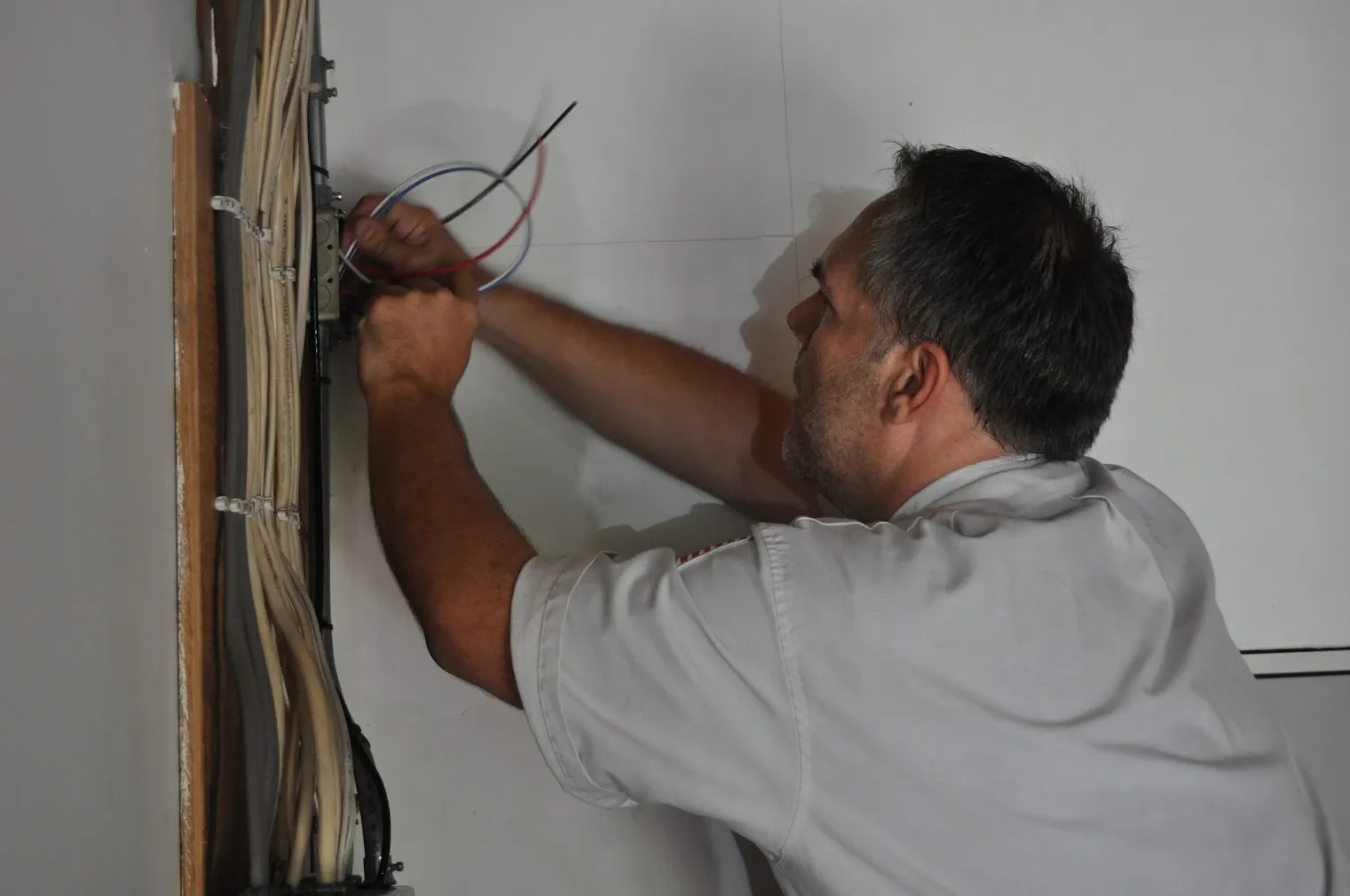
What Harrison Electric does
A whole-home rewire replaces the wiring throughout your home with modern copper wiring that meets current code. Harrison Electric evaluates your home before any work begins, creates a project plan, pulls the required permits, and coordinates the city inspection.
Rewiring requires opening walls to access existing wiring. Harrison Electric works to minimize disruption, discusses the scope and approach with you before starting, and takes care to protect your home during the process.
Most homeowners are surprised to learn that rewiring a home is not as disruptive as they expected. Your technician will be specific about what the project involves for your specific home before any work is authorized.
Aluminum wiring — a common concern in Twin Cities homes
Homes built between 1965 and 1973 frequently have aluminum branch circuit wiring. Aluminum wiring itself is not inherently dangerous — the problem is at the connection points. Aluminum expands and contracts at a different rate than the copper connections on most outlets, switches, and fixtures, causing connections to loosen over time. Loose connections create heat. Heat creates fire risk.
The standard correction is a process called pigtailing — connecting a short copper wire to the aluminum wire at each device. This is less invasive than full rewiring and is recognized by the Consumer Product Safety Commission as an acceptable solution when performed by a licensed electrician using the correct connectors.
Harrison Electric evaluates aluminum wiring and recommends the appropriate approach for your specific home.
When rewiring becomes necessary
Wiring doesn't announce when it's failing. It degrades gradually — insulation becomes brittle, connections loosen, and aluminum wiring expands and contracts until connections become unreliable. By the time something visible happens, the problem has usually been developing for years.
Your home may need rewiring if:
- The home was built before 1970 with the original wiring intact
- You have aluminum wiring — common in homes built between 1965 and 1973
- You have knob-and-tube wiring — common in homes built before 1950
- Breakers trip frequently with no obvious cause
- Lights flicker or dim throughout the home
- Outlets feel warm or have a burning smell
- Your home inspector flagged wiring concerns
- You're completing a major renovation and opening walls
Frequently Asked Questions About Wiring and Rewiring
Questions homeowners ask before booking wiring and rewiring work in Minneapolis and the Twin Cities.
How long does whole-home rewiring take?
- For most Twin Cities homes, a full rewire takes two to five days depending on the size of the home and the condition of the existing wiring. Harrison Electric gives you a specific timeline after evaluating the home. You will have power throughout most of the project — circuits are taken down one at a time rather than all at once.
Will rewiring require patching my walls?
- Some wall access is required. Harrison Electric works to minimize the number and size of openings needed. Your technician discusses the approach before any work begins so you understand what to expect. Many homeowners coordinate rewiring with a planned renovation so walls that need to be opened for other work serve double duty.
Is knob-and-tube wiring dangerous?
- Knob-and-tube wiring was a safe and acceptable installation method when it was installed — the problem is age and modification. Over decades, the rubber insulation degrades. More importantly, knob-and-tube wiring relies on open air for cooling and loses that cooling capacity when insulation is blown over it, which is common in older homes. Many insurance companies will not insure homes with active knob-and-tube wiring or will charge significantly higher premiums.
What to Expect on Every Harrison Electric Visit
Every visit follows the same process - from the moment your technician arrives to the moment they leave.
- 1
Tell Us What's Going On
Describe what you're experiencing - sounds, smells, flickering lights, tripped breakers, anything that seems off. The more detail you share, the faster we can find the source.
- 2
We Evaluate Your Entire System
Your technician performs a safety evaluation of your full electrical system - not just the problem you called about. We look for issues you may not know exist.
- 3
We Share What We Find
Before any work begins, your technician walks you through the findings. No surprises, no jargon - just a clear explanation of what's going on and what your options are.
- 4
You See Your Options and Pricing Upfront
Every option is presented with StraightForward Pricing before any work begins. You know exactly what each solution costs before you decide anything.
- 5
You Decide What Happens Next
Nothing gets started until you say so. You choose the option that works for your home and your budget. There is no pressure.
- 6
We Get to Work
Your technician completes the work to Harrison Electric's standards - and cleans up before leaving. We treat your home the way we'd treat our own.
- 7
Our Work Is Guaranteed
Every repair is backed by Harrison Electric's satisfaction guarantee and lifetime warranty on covered work. If something isn't right, we make it right.
- 8
We Handle the Paperwork
Your technician completes all documentation before leaving. You receive a full record of the work performed and any recommendations for follow-up.
Why Twin Cities Homeowners Choose Harrison Electric
In Business Since 1985
Family-owned and operated for 40 years. We built this business on doing things the right way - and that's still how we run it today.
StraightForward Pricing
All options and costs presented before any work begins. You approve everything first. No surprises on the final invoice.
Warehouse on Wheels
Our trucks are stocked with parts for most common residential repairs. No waiting for parts. No repeat appointments.
Lifetime Warranty on Repairs
Work covered by a lifetime warranty. If something goes wrong with a covered repair, we come back at no charge.
Local Technicians You Can Trust
Our technicians are licensed by the state of Minnesota, background checked, and held to the highest standards on every job. Your home and family are in good hands.
4.8 Stars on Google
Hundreds of verified reviews from real customers across the Twin Cities. Read what your neighbors are saying.