Safety & Inspections | Minneapolis, MN
Does Your Home Have a Dangerous Electrical Panel?
Certain panel brands installed in millions of homes from the 1950s through the 1990s have known safety defects. If your home has one, Harrison Electric can evaluate it and tell you exactly what your options are.
Why some older panels are a genuine safety risk
Your panel's job is to protect your home. When a circuit draws more power than its wiring can safely handle, the breaker trips — cutting power before wiring overheats or a fire starts. A panel that fails to trip is a panel that cannot do its only job.
Modern panels are designed and tested to trip reliably. Several older brands were not. Independent testing and decades of field reports from electricians and home inspectors have documented failure rates that pose real fire and shock hazards. These panels can operate without incident for years — and then fail at exactly the wrong moment.
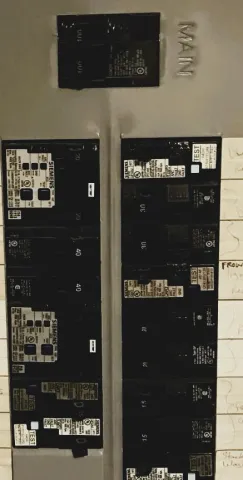
Panel brands with documented safety concerns
If your home was built between 1950 and 1990 and the panel has never been replaced, it is worth knowing what you have.
Federal Pacific Electric (FPE) Stab-Lok
The most widely documented problem panel in the United States. Installed in millions of homes from the 1950s through the 1980s. A New Jersey court found that FPE knowingly distributed breakers that did not meet UL testing standards. Independent testing found these breakers fail to trip at rates far exceeding acceptable limits. Harrison Electric recommends immediate evaluation for any home with an FPE Stab-Lok panel.
Zinsco and GTE-Sylvania
Common in homes built in the 1960s and 1970s. Zinsco breakers are known to melt to the bus bar — meaning the breaker physically cannot trip even if you try to switch it off manually. Experts estimate that as many as 25% of all Zinsco breakers could fail to trip in response to an overload. Zinsco panels often have brightly colored breaker toggles — red, blue, or green.
Challenger
Produced in the 1980s and 1990s. Subject to recalls in 1988 and 2014 for overheating and melting under load.
Pushmatic and Bulldog
Identified by push-button breakers rather than toggle switches. These panels are old, difficult to service, and prone to failure due to age alone.
Warning signs that warrant a call today
You don't need to open your panel to identify red flags. Call Harrison Electric if you notice any of the following:
- Burning smell or unusual odor from the panel area
- Breakers that trip frequently or won't stay reset
- Flickering lights or unexplained power fluctuations
- Rust, corrosion, or discoloration on or around the panel
- Buzzing or sizzling sounds near the panel
- Your home was built between 1950 and 1990 and the panel has never been replaced
What Harrison Electric does
Harrison Electric performs a complete evaluation of your existing panel — testing breaker operation, inspecting for signs of overheating or failure, and confirming whether what you have poses a safety risk. If your panel needs to be replaced, every option is presented with StraightForward Pricing before any work is authorized. Nothing gets started without your approval.
Panel replacement in Minnesota requires a permit and a city inspection after the work is complete. Harrison Electric handles the permit process as part of every panel replacement. You do not need to manage this yourself.
What happens during a panel evaluation
A step-by-step look at what Harrison Electric does from arrival to sign-off.
- 1
We identify your panel brand and model
Your technician opens the panel door and identifies exactly what you have — brand, age, and configuration. If you're not sure what brand your panel is, we find out.
- 2
We test breaker operation and inspect for damage
Every breaker is tested. We look for signs of overheating, melting, corrosion, and physical damage — the failure modes most common in the problem panel brands. We also evaluate whether your panel's capacity is appropriate for your home's current electrical load.
- 3
We explain exactly what we found
Before any work is discussed, your technician walks you through every finding in plain language. No jargon, no pressure. You get a clear picture of what you have and what the risk level is.
- 4
You see your options and the cost before anything is authorized
Every repair and replacement option is presented with StraightForward Pricing. You decide what happens next. Harrison Electric handles the permit process for any panel replacement — you do not need to manage this yourself. You receive documentation of all work performed.
Frequently Asked Questions About Unsafe and Outdated Electrical Panels
Common questions from Minneapolis and Twin Cities homeowners about dangerous panel brands.
How do I know what brand my panel is?
- The brand name is typically printed on the panel door or on the breaker handles. If you see Federal Pacific, Stab-Lok, Zinsco, Sylvania, or Challenger, call Harrison Electric for an evaluation. If you're not sure what you're looking at, a photo sent to us before you schedule can often help identify it.
Can I just replace the individual breakers instead of the whole panel?
- For most of these panel brands, replacement breakers are no longer manufactured. Aftermarket alternatives may not be safe or code-compliant. Harrison Electric recommends full panel replacement for FPE and Zinsco panels — it is the only solution that reliably addresses the underlying safety problem.
Does panel replacement require a permit?
- Yes. Panel replacement in Minnesota requires a permit and a city inspection after the work is complete. Harrison Electric handles the permit process as part of every panel replacement. You do not need to manage this yourself.
The electrician, John from Harrison Electric did a fantastic job. He did all the troubleshooting and explained to me what he was doing. He was respectful of me and my home, taking his shoes off. Very personable.
Not sure what panel you have? We'll find out.
A Harrison Electric technician can identify your panel brand, test every breaker, and give you a clear picture of what you have and what — if anything — needs to happen. Every option is presented with StraightForward Pricing before any work is authorized.