Safety & Inspections | Minneapolis, MN
Whole Home Surge Protection: What It Does and Whether You Need It
A power strip protects one outlet. Whole home surge protection protects everything — your panel, your wiring, and every appliance and device in the house, including the ones you can't unplug.
What causes power surges
A power surge is a sudden spike in electrical voltage that lasts a fraction of a second — long enough to damage electronics, degrade appliances, and in some cases start an electrical fire.
Surges come from two directions.
External surges
Come from outside your home. Lightning is the most obvious cause, but most external surges come from the utility grid — switching events, downed lines, equipment failure, or power restoring after an outage. You have no control over any of these.
Internal surges
Come from inside your home. When a large motor-driven appliance — a refrigerator compressor, an air conditioner, a furnace blower — cycles on and off, it creates small voltage spikes. These aren't dramatic, but they happen dozens of times a day and contribute to the gradual degradation of electronics over time.
What whole home surge protection does
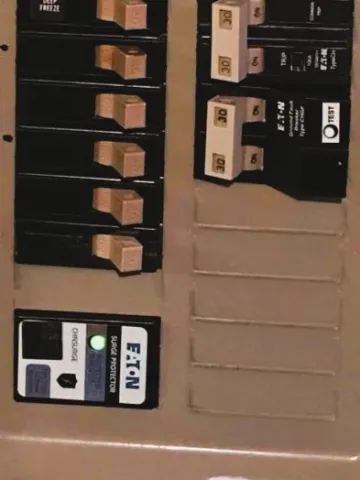
A whole home surge protector is installed at your electrical panel. When a surge enters from outside the home — or originates from within — the device diverts the excess voltage away from your circuits before it reaches your wiring, appliances, and devices.
This is different from a power strip surge protector in one important way: a whole home device protects every circuit in the house, including hardwired appliances like your furnace, air conditioner, refrigerator, and dishwasher that can't be plugged into a power strip at all.
What it does not cover
A direct lightning strike to your home is an extreme event that can exceed the capacity of any surge protection device. Whole home protection significantly reduces the risk and damage from most surge events — including nearby lightning strikes — but is not a guarantee against all damage in a worst-case direct strike. Harrison Electric will always be straight with you about what any product does and doesn't do.
When Harrison Electric recommends it
Whole home surge protection makes sense for most Twin Cities homes, and is worth prioritizing if any of the following apply:
- Your home has newer electronics, smart home systems, or high-value appliances
- You've experienced a surge event — a nearby lightning strike, an outage, or appliances behaving unusually after power restored
- Your home is in an area with frequent storms or utility switching
- You've recently had a panel replacement or major electrical upgrade
- You are a Safety & Savings Plan member — surge protection is one of the most cost-effective additions to a protected home
Frequently Asked Questions About Whole Home Surge Protection
Common questions about whole home surge protection from Minneapolis and Twin Cities homeowners.
Do I need whole home protection if I already have power strips?
- Power strips protect only the devices plugged directly into them. They do nothing for hardwired appliances — your furnace, air conditioner, refrigerator, or dishwasher. Whole home protection works at the entry point so every circuit is covered, not just the outlets with strips attached.
How is it installed?
- The device is installed at your main electrical panel by a licensed electrician. It takes one to two hours in most homes with no major disruption required.
Is this something to do after a storm?
- Yes. If your home experienced a surge event — a nearby lightning strike, an outage and restoration, or appliances behaving unusually afterward — surge protection installation is a reasonable and relatively affordable next step. Harrison Electric also recommends it proactively rather than waiting for a surge event to make the decision for you.
The electrician, John from Harrison Electric did a fantastic job. He did all the troubleshooting and explained to me what he was doing. He was respectful of me and my home, taking his shoes off. Very personable.