Safety & Inspections | Minneapolis, MN
Is Your Home's Electrical System Safe?
Most electrical hazards develop slowly and invisibly — behind walls, inside panels, in connections you can't see. A Harrison Electric home safety inspection finds them before they become emergencies.
Why a safety inspection matters
Your home's electrical system is not something you can evaluate by looking at it. Outlets look fine. Lights turn on. The panel door stays closed. But behind the walls and inside the panel, connections loosen over time, wiring insulation degrades, and circuits that were adequate for a 1970s household may be running far beyond their original design capacity today.
Electrical fires are the second leading cause of residential house fires in the United States. The majority develop from conditions that were present long before anything visible went wrong — overloaded circuits, deteriorating wiring, panels that fail to trip when they should. An inspection does not just tell you what is wrong. It tells you what is developing before it becomes a problem.
For older Twin Cities homes especially, an inspection is one of the most cost-effective things a homeowner can do. Catching a failing panel or deteriorating wiring before it causes a fire or a service disruption is far less expensive than dealing with the consequences.
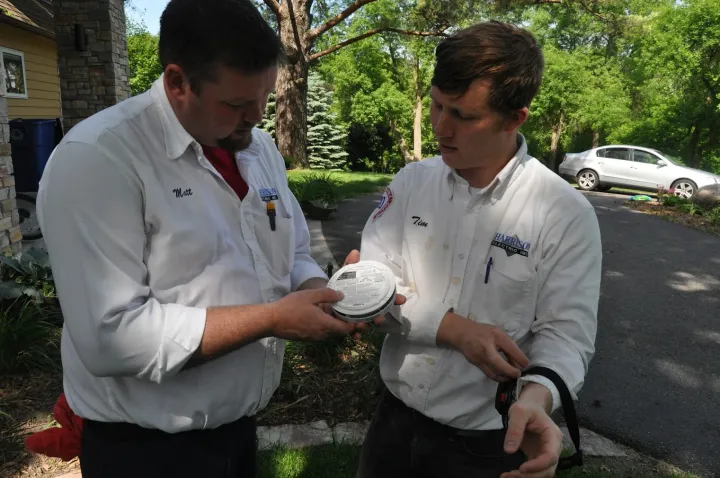
What Harrison Electric looks at on every inspection
A Harrison Electric safety inspection is a complete evaluation of your electrical system — not a visual scan. Your technician works through your home systematically, testing and evaluating the components most likely to cause problems.
Every inspection covers:
- Electrical panel — condition, labeling, breaker operation, capacity
- Circuit breakers — testing for trips, overheating, and damage
- Outlets and switches — operation, grounding, scorching, wear
- GFCI protection — testing in kitchens, bathrooms, garages, and outdoor areas
- Smoke and carbon monoxide detectors — placement, age, and operation
- Wiring — visible wiring for damage, improper connections, or code concerns
- Outdoor electrical — service entrance, exterior outlets, lighting, and conduit
- Surge protection — current status and whether whole-home protection is warranted
- Major appliance connections — condition of connections and circuits
When the inspection is complete, your technician documents every finding in a written report you keep. You get a clear picture of what was found, what needs attention, and what can wait — with every repair option and cost presented before anything is authorized. Nothing gets started without your approval.
When an inspection makes sense
You just bought or are about to buy a home.
A general home inspection covers a lot of ground but rarely goes deep on electrical. A dedicated electrical inspection tells you exactly what you're inheriting — and what it will cost to fix — before you close.
Your home is more than 20 years old and hasn't been inspected.
Electrical systems age. Wiring insulation degrades, connections loosen, and panels adequate in 1985 may not be adequate today. Older Twin Cities homes frequently have systems that are technically functional but no longer safe.
You're adding a significant load.
Before adding an EV charger, hot tub, generator, or major appliance, it's worth confirming your system can handle it safely.
You're selling your home.
Minneapolis and St. Paul require a Truth in Housing electrical inspection before a home can be sold. Even where it's not required, a clean inspection report gives buyers confidence and can speed up the transaction.
You're a Safety & Savings Plan member.
Your annual safety inspection is included at no additional charge.
Frequently Asked Questions About Home Safety Inspections
Common questions about home safety inspections from Minneapolis and Twin Cities homeowners.
How is a Harrison Electric inspection different from a general home inspection?
- A general home inspection is a visual survey of accessible systems. A Harrison Electric electrical inspection tests components, evaluates capacity, checks code compliance, and identifies concerns a visual inspection misses — including inside panels and behind covers. Many general home inspectors recommend a dedicated electrical inspection for homes over 20 years old regardless of the general inspection result.
Will I find out right away if something needs to be fixed?
- Yes. Your technician explains every finding before leaving and gives you a written report documenting what was found. If repairs are needed, every option is presented with StraightForward Pricing before any work is authorized. You decide what gets done and when.
Is an inspection required to sell my home in Minneapolis?
- Minneapolis and St. Paul require a Truth in Housing electrical inspection before a home can be sold. See our Home Sale Electrical Inspection page for details on how Harrison Electric handles the full TISH process.
The electrician, John from Harrison Electric did a fantastic job. He did all the troubleshooting and explained to me what he was doing. He was respectful of me and my home, taking his shoes off. Very personable.